
Introduction
Endocrine and neurophysiological scope
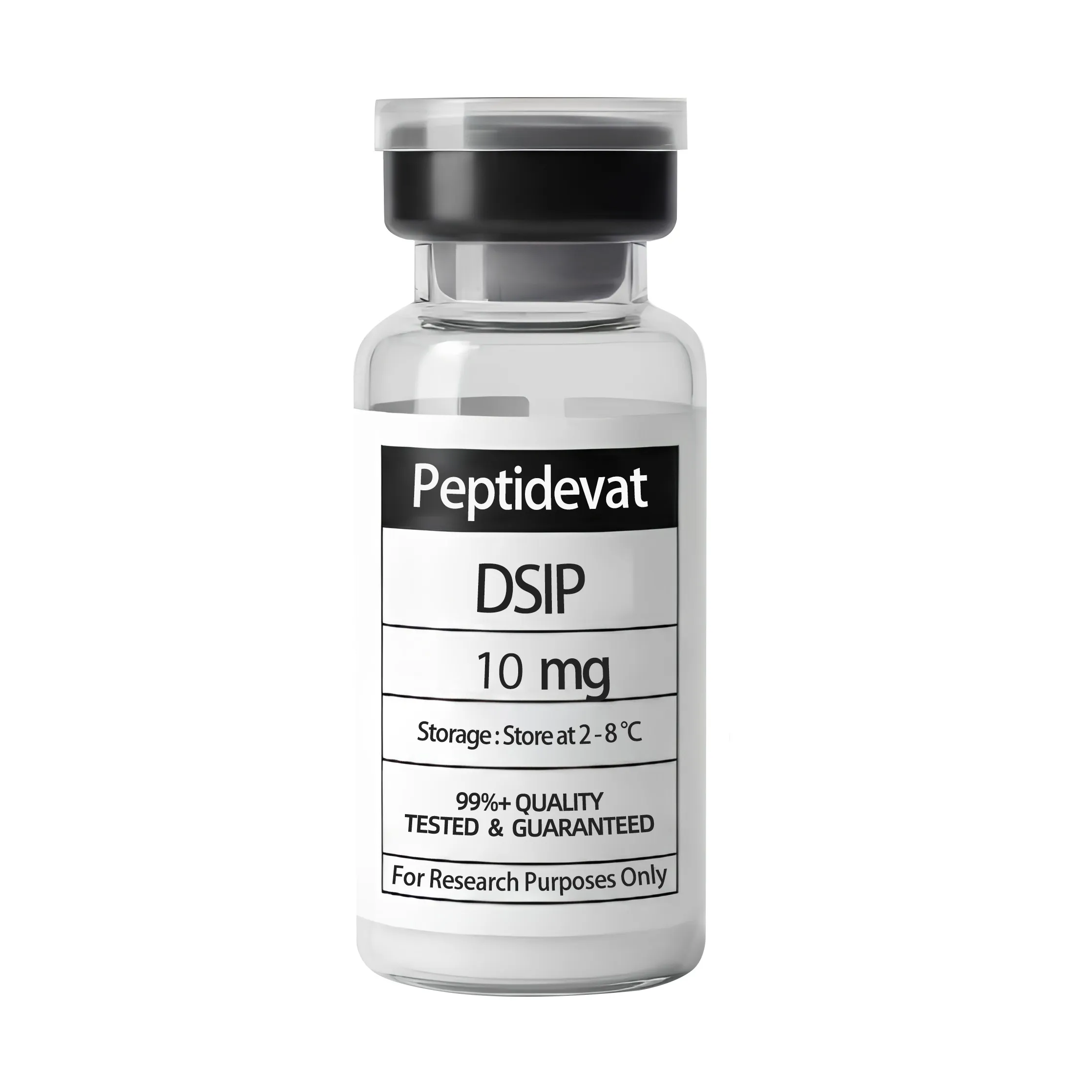
DSIP (Trp-Ala-Gly-Gly-Asp-Ala-Ser-Gly-Glu) influences corticotropin release, somatostatin inhibition, stress adaptation, blood pressure normalization, and nociception. Emerging studies explore its roles in depression, metabolic resilience, and mitigation of free-radical damage.
Dosing & Reconstitution Guide
Educational guide for dosing timing, cycling intent, cautions, and vial-format options
DSIP stands for Delta Sleep-Inducing Peptide, described for promoting and stabilizing natural sleep patterns. Beyond sleep, DSIP is also described as helping manage stress levels, normalizing blood pressure, influencing pain perception, and affecting hormone activity during sleep.
Deeper Research Notes (Summary):
• DSIP is described as interacting with the neurotransmitter GABA, which is associated with falling asleep and staying asleep—often discussed in the context of mental health and recovery.
• It is described as increasing endocrine-related activity during sleep (with mentions of increased release of growth hormone and thyroid hormone).
• DSIP is also described as acting on opioid receptors in the brain—discussed in the context of pain perception and easing withdrawal symptoms related to opioid substances.
Dosing & Timing (As Listed):
Intent: The goal is described as restoring normal sleep patterns; dosing is noted to continue based on response.
| Phase | Dose | Frequency | Timing |
|---|---|---|---|
| Initial | 100–300 mcg | Daily | ~3 hours before bed |
| After sleep stabilizes | 50–100 mcg | 1× per week | As needed to maintain pattern |
Caution & Contraindications:
Caution: May cause headache, fatigue, stomach discomfort, and may disrupt sleep.
Contraindications: Individuals with an active or history of cancer or hormonal imbalances.
Reconstitution Options (Vial Formats):
• 2 mg
• 5 mg
Reconstitution (General Handling):
• Use sterile technique and follow your product label/spec sheet for diluent type and volume.
• Add diluent slowly along the vial wall to minimize foaming.
• Gently swirl/roll until fully dissolved (avoid vigorous shaking).
• Store according to label guidance and protect from light as applicable.
Structure
Chemical composition and identifiers
Sequence: Trp-Ala-Gly-Gly-Asp-Ala-Ser-Gly-Glu
Molecular Formula: C35H48N10O15
Molecular Weight: 848.82 g/mol
CAS Number: 62568-57-4
Synonyms: Emideltide, DSIP nonapeptide, Deltaran

Sleep Research
Evaluating DSIP’s role in sleep architecture
DSIP was discovered during slow-wave sleep and can normalize sleep cycles in animal and human studies, though results vary. Reports include promotion of slow-wave sleep, paradoxical sleep suppression, transient arousal before sedation, and subjective improvements in sleep quality and latency among chronic insomnia cohorts.
Discrepancies between subjective outcomes and EEG metrics suggest DSIP may modulate natural (non-pharmacologic) sedation pathways, prompting researchers to revisit evaluation methods for sleep quality.
Analgesia & Stress Adaptation
Pain modulation, withdrawal support, and metabolic resilience
DSIP reduced chronic pain perception and improved mood in preliminary clinical settings, potentially via central opioid receptors—without apparent dependency. It mitigated withdrawal symptoms in alcohol and opiate detox studies, with 87–97% of patients reporting dramatic relief.
Animal models demonstrate DSIP’s ability to maintain oxidative phosphorylation under hypoxia, limiting metabolic injury in stroke and myocardial ischemia scenarios while curbing free-radical formation.
Neuropsychiatric & Oncologic Research
Depression, addiction, and cancer-preventive investigations
DSIP levels are reduced in individuals with major depressive disorder, aligning with findings linking sleep regulation, MAO-A modulation, and hypothalamic-pituitary-adrenal axis changes. Animal data support DSIP’s antioxidant contribution to neuroprotection.
Long-term administration in mice yielded a 2.6-fold reduction in spontaneous tumors and fewer chromosomal abnormalities. Additional studies indicate protection against chemotherapy-induced CNS dysfunction and enhanced survival following cerebral ischemia.
Physiological Regulation
Broader systemic effects
DSIP is detected in peripheral tissues at levels comparable to CNS concentrations, hinting at systemic regulatory roles. It may act as a hypothalamic hormone influencing cardiovascular tone, thermogenesis, lymphokine networks, and skeletal muscle growth via somatostatin inhibition.
Reviews
There are no reviews yet.